Training by role

    AI marketing and communication training in Switzerland

    We train your marketing and communication teams to produce faster, in several languages and across all your channels, without your content starting to look like everyone else's.

    • More than 150 organisations supported across French-speaking Switzerland and France
    • 4,500 professionals trained since January 2023
    • 5.0/5 on Google (51 reviews)
    • Maximum of 12 participants per session, at your offices or remotely
    • Training delivered in French and English, German available
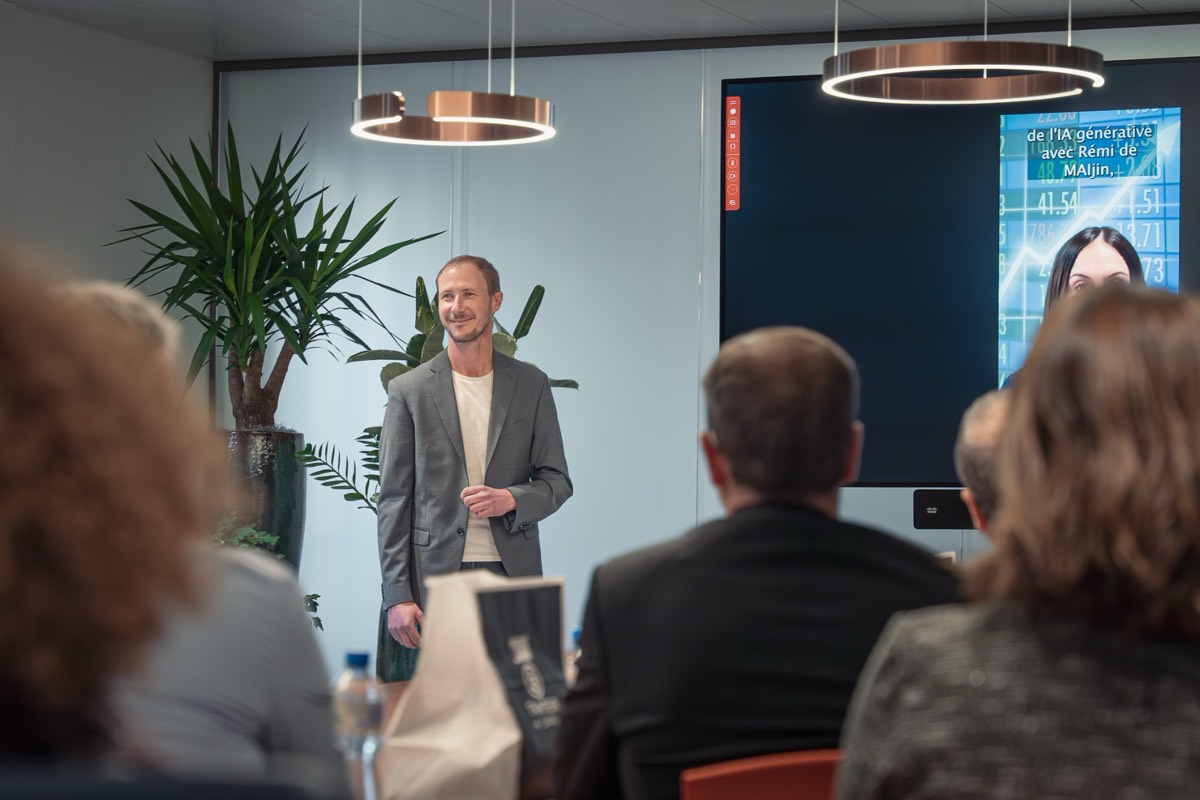
    Maijin trainer presenting on generative AI to a group of participants in a meeting room
    12participants max per session

    Your teams have already opened ChatGPT. They may have generated a few visuals. And they end up with copy that is correct but interchangeable, copy they have to rewrite before it finally sounds like your brand. The time saved on generation is lost again on correction. Our AI marketing training starts from your real campaigns: it embeds AI into the day-to-day processes of marketing and communication rather than letting it produce alongside them.

    The question Swiss marketing departments now ask is no longer whether to adopt generative artificial intelligence. It is how to go ahead without diluting their voice, without exposing their customer data, and without losing three months to collective trial and error.

    Our position is simple: AI should not write in your place. It should prepare, adapt, analyse and organise, while your team keeps control of the tone, the angle and the editorial decision.

    The cost of waiting

    AI marketing training: what it really costs

    Without a shared method, everyone reinvents their own prompts in their corner. The lost time never shows up on a dashboard: it shows up in your lead times and in the gradual flattening of your content.

    Uniformity

    LinkedIn posts that look like everyone else's, emails that scream AI, a brand losing its voice. This is the direct consequence of using AI without few-shot prompting: the model writes in its average style, not in yours.

    Scattered effort

    Teams testing fifteen tools without knowing which one to keep. What we see in the field never varies: productivity rises as you go from one tool to three, then collapses at the fourth.

    Multilingual work outsourced by default

    A campaign that needs a German or Italian version still goes to an agency out of habit, with the lead time and the budget that come with it. This is precisely where the gap between the old cost and the new one is widest.

    No framework for your data

    As long as no written rule states which tools are approved and what must never leave the company, everyone decides alone, on a free account, working on customer files.

    Since January 2023

    AI training for marketing and communication: numbers, not promises

    • More than 150 organisations trained across French-speaking Switzerland and France
    • 4,500 professionals trained since January 2023
    • 5.0/5 from 51 Google reviews
    • Sessions delivered in French, English and German
    Jean-Baptiste BerthouxRémi VancayzeeleLaurent Rajca
    Trainers who use AI every day on their own projects, not only in the training room.
    5.0 out of 51 Google reviews
    Train your teams

    AI use cases in marketing and communication

    Four families of use cases, built from the requests we receive most often from Swiss marketing and communication teams. Each workshop covers two or three of them, working on your own content.

    Creation
    • Marketing email sequences: with one marketing team we supported, building a three-email sequence went from two hours to five minutes, using a prompt tailored during the session
    • Newsletters: structure, angle, subject line and hook variants, built from your previous issues rather than from a blank page
    • LinkedIn posts using few-shot prompting: product context and your past posts attached, so the model writes in your structure and your style
    • Creative briefs and product sheets: briefing becomes instant, with the objective unchanged and a visual that sells rather than one that merely looks nice
    • Generative images: producing visuals that match your brand guidelines, with an image generation guide handed over to the team
    Adaptation
    • Multilingual campaigns in French, German and Italian: the area where the gap shows most clearly on a Swiss market, provided the translation prompts are rebuilt around your in-house glossary
    • Adapting one piece of content per channel: the same message reworked for your website, LinkedIn, the newsletter and print, with the format and tone constraints specific to each
    • From long-form content to a series of posts: a study, an annual report or a white paper turned into eight to twelve posts, with no repetition and no loss of substance
    • Plain language and easy-to-read versions: turning an institutional text into an accessible one, a real case worked through with the communication team of a Geneva public institution
    • From job advert to social posts: an assistant that takes the advert and produces the social media versions, useful for employer branding
    Analysis
    • Campaign performance analysis: moving from a raw export to a channel-by-channel reading, with actionable recommendations and the methodological limits stated openly
    • Competitive and positioning research: a structured analysis in fifteen minutes where it used to take several days, with deep research and cross-checked sources
    • Market research and surveys: writing the invitation, building the questionnaire, then processing the answers. On one real case, 140 responses were handled, the quantitative side turned into charts through code, the qualitative side into trends and verbatim quotes
    • Analysis of verbatim comments and customer feedback: surfacing themes, weak signals and irritants, with the resulting work prioritised
    • Personas and objections: using a reasoning model rather than a standard one, a difference in depth that is visible during the session
    Organisation
    • Editorial guidelines and brand consistency: putting your tone in writing so it becomes reusable by the whole team, not only by whoever writes best
    • Editorial calendar: an assistant that keeps the schedule, suggests topics and flags the gaps, built with the team during the session
    • Event checklists and standard replies: the repetitive tasks of communication work, the ones everyone redoes from memory each time
    • A documented library of assistants: on one communication team engagement, nine assistants were delivered together with a resource space gathering every prompt used
    • FAQs and recurring questions as a conversational agent: turning your existing FAQ into a voice or text agent, reachable through a QR code
    In-company AI training for Marketing with Maijin
    Our method

    AI training for Marketing in Switzerland: we come to where your teams are

    Training built on your real files, not on generic examples

    Before each session we ask you for three or four genuine pain points: a file that keeps slipping, a document nobody has time to write, a manual step everyone copies from the last person. The exercises are built on those, never on a textbook case.

    From the first hour we also set a clear rule about what may go through an AI tool and what must never leave your organisation. Your teams walk away with the habit, not just with the demo.

    Our approach

    We train marketing and communication professionals to put generative AI to work

    We're not just AI consultants and trainers, we use AI every day for our own LinkedIn content, newsletters, campaigns. We know what works. And especially, what doesn't.

    We train your marketing teams to integrate generative AI at every stage of the marketing cycle with a proven method across 150+ organizations:

    Step {n} 01

    1. Sector expertise

    No generic training on "AI for everyone". Concrete, pure marketing: market research, action plans, content creation, campaigns, reporting, customer relations.

    Step {n} 02

    2. Support in spaced half-day sessions

    Half-day sessions spaced 1 to 3 weeks apart, a rhythm designed for busy managers. Because you don't transform a team in 1 day. Between sessions, short exercises on your real content keep the attention going: we anchor practices and correct prompts, and adjust to real cases.

    Step {n} 03

    3. Results measured, not promised

    We measure every assignment and we publish what our clients allow us to publish: 92.5% satisfaction on the MyComm workshop, and five participants out of five stating that they intended to increase their use of AI after we supported the communication team of a Geneva public institution.

    This is AI marketing training designed for teams subject to the revised FADP: your teams produce differentiated content, automate what needs to be, and keep 100% of their brand DNA.

    Why Maijin is not "just another AI training company"

    Marketers first

    We use AI daily for our own content. We don't train on AI in general, but on AI applied to marketing.

    Proven method

    More than 150 organizations and 4,500 professionals supported, including 20 organizations in marketing. Measurable and reproducible results.

    Spaced half-day support

    Half-day sessions spaced 1 to 3 weeks apart, with exercises in between. Because adoption happens over time, not in 1 day.

    Solid references

    RTS, Orange Advertising, Villages Clubs du Soleil, Visiplus Academy, and many more trust us.

    Our AI marketing training formats

    Three ways in, depending on your team's starting level and the time you can free up for them.

    Discovery training

    A first session to give the whole team the same foundation: what these tools can do, what they cannot, and the first few moves that save time from the next morning on.

    Recommended

    Spaced half-day support programme

    The complete path, from the foundation through to the most advanced uses in your field, delivered as half-day sessions spaced 1 to 3 weeks apart. A rhythm designed for busy managers: in between, your teams work through exercises on their real files, and we adjust the next session around whatever got stuck.

    Highly specific workshop

    One short slot, one tool, one precise task. The format to pick when the foundation is already there and a single use case still needs unlocking.

    Example

    Copilot for Excel for marketing analytics

    90-minute workshop: CHF 1,000. Half day: CHF 2,000. Full day: CHF 3,000 to 3,500. Day of targeted workshops: CHF 2,500. Rates exclude VAT, apply per group session of up to 12 participants, and include travel costs. The spaced half-day programme is quoted on the half-day rate (CHF 2,000 per session).

    Our track record in artificial intelligence training in Switzerland

    +150

    organisations supported

    4,500

    professionals trained since January 2023

    5.0 / 5

    on Google (51 reviews)

    12

    participants maximum per session

    Scoping call, no commitment

    Let us find the AI marketing training format that fits your team

    30 minutes to scope your need, quote within 48 hours.

    Discuss your projectNo commitment, and the scoping call is not charged.

    Our support methodology

    Simple, pragmatic, actionable. We combine methodological transmission, practice on your real cases and field support to anchor practices over time.

    Before: Needs assessment (30 min)

    • Framing objectives and marketing priorities
    • Selecting the most relevant use cases for your team
    • Identifying quick wins and current blockers

    Our support in spaced half-day sessions

    Half-day sessions spaced 1 to 3 weeks apart, to anchor practices at the pace of your own activity without blocking your managers' diaries.

    We deploy progressive pedagogy: acculturation, application and consolidation. Between each session, your teams work through short exercises on their real subjects, which keeps the attention going from one appointment to the next, while we remain available asynchronously to unblock situations.

    Contact us to learn about our pedagogy in detail.

    Our approach: spaced half-days rather than one compressed block

    Instead of compressing everything into 1 or 2 days (like 90% of training organizations do), we opted for half-day sessions spaced 1 to 3 weeks apart, with exercises between each one. Why?

    • Digestion time : between each session, your teams have time to practice on their real cases, encounter difficulties, ask questions.
    • Continuous adjustment : we adapt the content of each session based on feedback from the previous one. We don't recite a fixed program, we support a transformation.
    • Lasting anchoring : cognitive studies confirm it: you retain better what you practice regularly than what you swallow at once.

    Additional options

    Monthly or quarterly follow-up

    Coaching sessions, AI watch, thematic workshops, office hours to maintain momentum and support new use cases.

    Creating custom GPT assistants

    We develop custom assistants to automate your recurring tasks: brief generation, email writing, data analysis, etc.

    No-code automations

    Setting up automated workflows with Make or n8n to connect your tools and save time on repetitive tasks.

    Case studies: AI in marketing and communication inside Swiss organisations

    MyComm: the whole marketing funnel in two hours

    Context

    A sports events agency. A two-hour remote workshop built with Julie Buisson, head of marketing, around a real case: promoting their travel offer. Nine deliverables covered, from online and offline strategy to a video trailer, and 92.5% satisfaction.

    MAMCO: three multilingual deliverables in four hours

    Context

    The museum of modern and contemporary art in Geneva. In a four-hour workshop the team left with a multilingual voice agent, a podcast and a chatbot reachable through a QR code, exactly the tools quoted at three months and CHF 8,000 per language.

    A communication team: nine AI assistants delivered in a day and a half

    Context

    A Geneva public institution in the social sector. Five communication professionals trained over a day and a half, nine AI assistants built one by one from the list of needs sent ahead of the session, documentation rated 4/4 unanimously and five answers out of five to the question "will you increase your use of AI".

    They trusted us

    Marketing department of a Geneva public institution
    15+ thematic webinars - Visiplus Academy
    YouLoveWords Agency (Paris)
    Copywriters & product managers - Propulse Lab
    Marketing Team - Villages Clubs du Soleil
    Marketing team - Radio Télévision Suisse (RTS)
    Marketing direction - Orange Advertising
    Podcast agency - Mélanie Hong
    Creative writing agency - Aurélie Perrin

    AI marketing training near you: Geneva, Vaud, Valais, Neuchâtel, Fribourg

    This career path comes in five cantonal versions, each with the use cases and examples of the canton concerned.
    Your AI trainers for Marketing

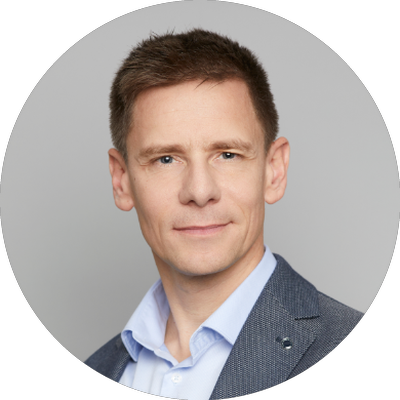
    Jean-Baptiste Berthoux

    Jean-Baptiste Berthoux

    Chief AI Officer

    An engineer by training, Jean-Baptiste gave his first AI coaching in January 2023. Drawing on his experience, he developed a unique pedagogy, the fruit of his field work and his mastery of the tools.

    LinkedIn
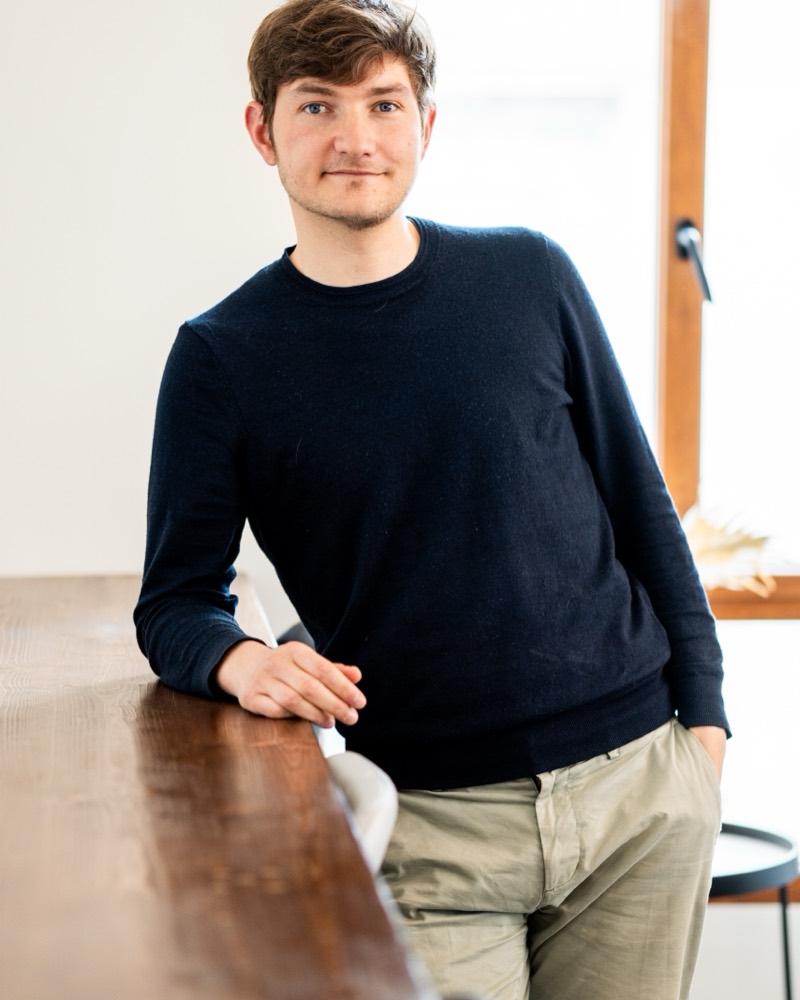
    Rémi Vancayzeele

    Rémi Vancayzeele

    CEO

    Serial entrepreneur, Rémi has 15 years of experience in managing complex projects. In 13 months, he trained more than 1,300 people and built the pool of trainers and consultants at MAIjin.

    LinkedIn

    Meïdy Baffou

    Meïdy Baffou

    Trainer and Consultant

    Engineer and entrepreneur since 2016, Meïdy Baffou designs autonomous AI agents and tailor-made automation systems for companies across all sectors. His own SaaS products run entirely on agent fleets. With 10 years of experience across technology, digital marketing and business management, he now works in AI consulting, training and implementation.

    FAQ: AI training for Marketing in Switzerland

    Yes, and no technical prerequisite is required. We train marketing and communication teams, not developers, and some participants have never opened a generative AI tool. The discovery training is designed for exactly that case: giving the whole team the same foundation before going further. Groups are capped at 12 participants and everyone works on their own content, which lets us set the pace by the room's actual level rather than by a theoretical syllabus. A skills questionnaire goes out two weeks before the session, along with a setup sheet, which lets us adjust the pace and avoid any installation on the day itself. All you need is a computer and an internet connection, plus Microsoft 365 and Copilot access if your company has chosen that tool. We routinely handle complete beginners and daily AI users in the same room: that is the normal situation, not the exception.

    In a corporate setting we only work with professional versions: ChatGPT Business, Claude Team, paid Copilot. They are the only ones that give you a data processing agreement and that do not use your content for training. Depending on sensitivity, three strategies are available: hosting on European or Swiss servers, anonymisation before sending, or routing, with sensitive material handled locally and the rest in the cloud. The main point of attention in marketing is the personal data of your contacts and customers, which must never be pasted into a free consumer account. The technical trap we systematically flag to companies running Microsoft 365: deploying paid Copilot without having configured SharePoint permissions first, then discovering that anyone can query confidential documents. AI does not create that problem, it exposes a failing document governance. After the training, what stays with you is a written rule: which tool is approved, which data may pass through it, and what never leaves the company.

    This is the number one objection in marketing, and it is well founded: now that everyone drafts with a conversational agent, content is starting to look the same. That is exactly why this training exists. We teach four concrete practices. First, few-shot prompting, which means attaching your past content so the model writes in your structure and your style rather than in its average style. Second, the principle of not writing with AI but using it as a literary assistant that proposes angles and structure while you keep the pen. Third, dictation, either into a recorder or in voice mode, asking the model to keep your own words. Finally, accepting that on some texts AI simply will not get there: during the MAMCO engagement it failed to write in the museum's style even with a style guide built during the session, and the winning move was to shift it from writer to editorial coach. On errors, the rule is the same as on tone: nothing is published without a human read. A market figure, a quotation, a product reference or a partner name is checked at source before publication, and we train your teams to require the model to flag what it cannot find rather than fill the gap.

    Yes, on three levels. Data first: your contact and customer files fall under the revised FADP, and under the GDPR if you handle data on European residents. So before any exercise we set out with you the rule for what may pass through an AI tool and what stays with you. The market next: Swiss marketing is multilingual by construction, and adapting a campaign into French, German and Italian is where the gap between the old cost and the new one is widest. We work on it systematically, from your in-house glossary rather than from a generic translation. Production last: on generated visuals and voices, we settle in session what you allow yourselves to publish and what you choose to label as generated, so the question is answered in writing before the first campaign rather than after. Your obligations remain yours: we train your teams to work within your framework, we do not replace it.

    Yes, the training uses your real environment. We train on the tools you already use or are about to choose, not on a catalogue. The conversational foundation depends on your ecosystem: ChatGPT and ChatGPT Work, Claude, Microsoft Copilot if you are already on Microsoft 365, or Gemini. We also cover Perplexity and deep research for monitoring, Canva Pro, Midjourney and Gamma.app for visuals and presentations, and we train on your internal tools when you have them. Our rule is the rule of three: one general conversational tool, one research and synthesis tool to digest large volumes, and one specialised tool for your role. Productivity rises as you go from one tool to three, then collapses at the fourth.

    Our rates are in Swiss francs excluding VAT, travel costs included. A targeted 90-minute workshop costs CHF 1,000. A half day costs CHF 2,000. A full day costs CHF 3,000 to 3,500. A day of targeted workshops in 90-minute slots costs CHF 2,500. The spaced half-day programme is quoted on the half-day rate (CHF 2,000 per session). These prices are per group session and not per participant, up to 12 people: training four people costs the same as training twelve, which allows far more tailoring with a small group. The preparatory 30 to 45-minute scoping call is not charged.

    Three common formats. The discovery training, one day to give the whole team a shared foundation and the first pieces of content that hold up. The spaced half-day programme, our recommended format, which goes from the foundation through to production workflows. The sessions are spaced 1 to 3 weeks apart, a rhythm designed for busy teams: in between, exercises on your real campaigns keep the attention going and we adjust the next one around whatever got stuck. And the highly specific workshop of 90 minutes, one tool for one task: Copilot for Excel for marketing analytics, for instance. The right format is settled in a 30 to 45-minute scoping call, at no charge.

    French and English. English is not a token option: international organisations based in Geneva regularly require us to deliver in that language, and it is common practice for us. German is available, with a German-speaking trainer from our pool. It is worth separating the language of delivery from the language of the content being worked on: we regularly train French-speaking teams to produce campaigns in German and Italian for the Swiss market.

    Yes. Between the sessions of a programme, your teams practise on their real campaigns and come back with what got stuck: we correct the prompts, adjust the templates, and stay available asynchronously to unblock situations. After the training, organisations that want the practices to hold move on to monthly or quarterly follow-up: coaching sessions, AI watch, themed workshops, open office hours. On request we also build tailored assistants for your recurring tasks and no-code automations between your tools. It is the round table at the following session that turns a demonstration into a habit, not the first day.

    We do not deliver an academic curriculum: we install working practices. The difference lies in the format and in who delivers it: 12 participants maximum, your own content rather than a standard deck, and trainers who use AI every day for their own publications, newsletters and campaigns. The programme is built on the pain points raised during scoping, never on a catalogue. That is what explains the 5.0/5 rating from 51 Google reviews and the documented results of our case studies, from the events agency to the public institution.

    We measure time saved on tasks identified before the session, the perceived quality of the content produced and actual tool adoption at thirty days. Every assignment includes a satisfaction survey: the MyComm workshop scored 92.5% satisfaction, and on our engagement with the communication team of a Geneva public institution, all five participants stated they intended to increase their use of AI. As supporting evidence, Ethan Mollick's work on consultants equipped with AI shows 12.2% more tasks completed, 25.1% faster, with quality 40% higher.
    Tailored quote

    Train your teams in AI

    Jean-Baptiste BerthouxRémi Vancayzeele

    Get in touch with Jean-Baptiste and Rémi, they will be glad to answer your questions

    • A 30 to 45-minute scoping call, at no charge
    • A programme built around your three priority pain points
    • Your confidentiality constraints settled before the first session

    Your details are used only to handle this request. They are never sold or used for anything else.

    or book a 30-minute call straight away
    L'hebdo mAIjin